Architecture notes
Structured, correct, and scalable service repos
A simple note on service-based repository architecture, standardized pipelines, and why clear repo boundaries help both agents and people.
The architecture idea is simple: each service or product gets its own repository, its own source files, and its own clear operating lane. DenisKachar.com, Renov8, BluePeak, MapleLift, and the other projects do not need to be tangled together to move forward.
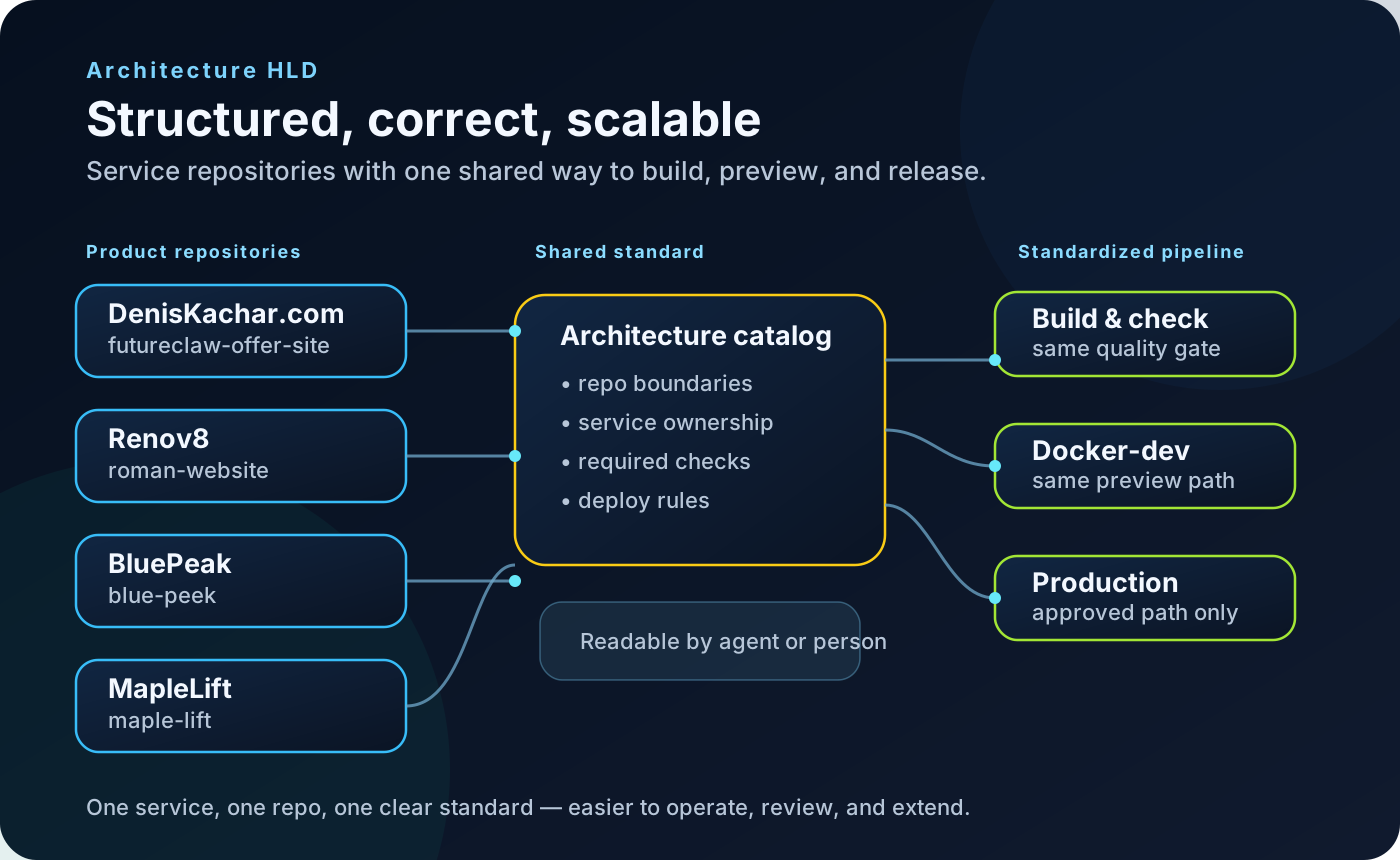
That structure helps an AI agent because the agent can work inside one clear boundary at a time: one repo, one product, one pipeline, one set of files to verify. It also helps any person without access to AI, because the repo itself explains where the source lives, what image is built, and how a change gets tested.
The important part is standardization. Across services, the pipelines follow the same pattern: build the site or service, run checks, publish a Docker-dev image for local testing, and keep production behind the approved path where that service has one.
So the architecture is a service catalog and a standard, not a pile of one-off projects. It makes the system easier to operate whether the next worker is an agent or a person opening the repo for the first time.
Good architecture is structured, correct, and scalable: easy to find, easy to test, and hard to accidentally mix together.
One service, one repo, one clear standard.